
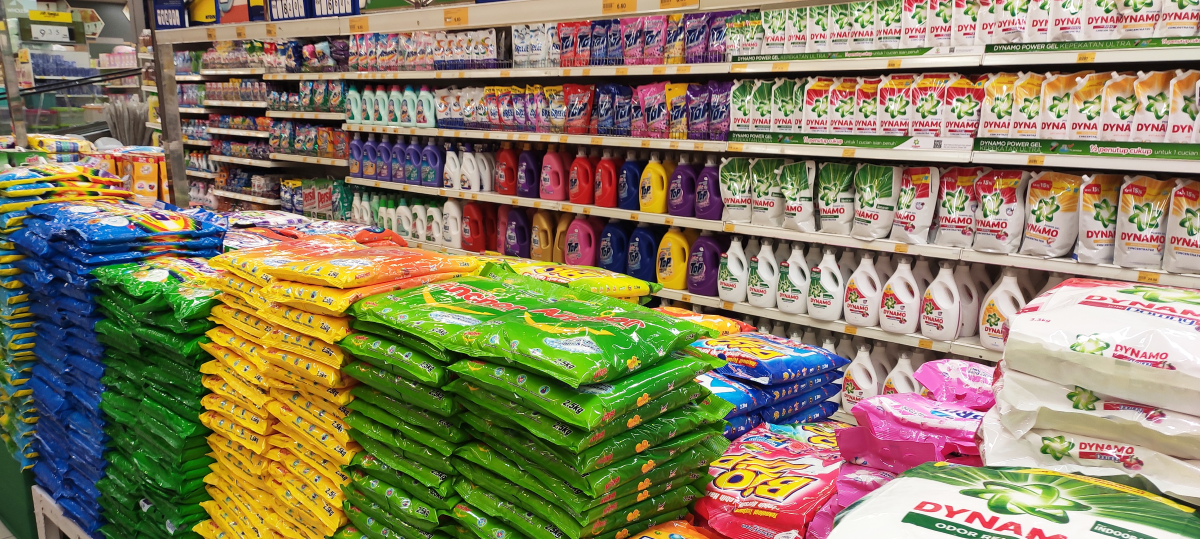
Walk through an Australian supermarket and you will find laundry powders, liquids, capsules, concentrates and products claiming to be the Best Laundry Detergents. Being suitable for everything from sensitive skin to stubborn stains. With so many choices, deciding which laundry detergent is genuinely best can be difficult.
The truth is that there is no single detergent that is best for every load. The right product depends on your washing machine, the fabrics you are washing, the type of stains involved and how much you want to spend.
Independent Australian testing, including testing conducted by consumer organisation CHOICE, is more useful than relying solely on packaging claims. Results also demonstrate why it is important to compare detergents separately for front and top loaders.
How laundry detergents are tested
Independent laboratory tests use fabric swatches marked with standardised stains. These can represent common laundry problems such as:
- Grass and mud
- Oil and grease
- Blood and other protein-based stains
- Food and drink
- Makeup
- Sweat and body oils
The swatches are washed under controlled conditions so the results of different detergents can be compared. Testers may also consider the recommended dose, cost per wash and whether a product is intended for a front or top-loading machine.
Testing provides a useful guide, but it cannot predict every result at home. Water temperature, machine condition, load size, fabric type and how long a stain has been present can all affect cleaning performance.
Product formulas and prices also change. For this reason, a detergent named as a leading performer in one year should not be assumed to remain the best indefinitely. Check the date of any ranking and look for the latest independent Australian results.
Best detergent for front loaders
Front-loading machines require a low-sudsing detergent. Products labelled for front loaders—or for both front and top loaders—are formulated to control foam while the clothes tumble through a relatively small amount of water.
Excessive suds do not make clothing cleaner. They can interfere with the washing action, make rinsing more difficult and leave detergent residue behind.
For a front loader, look for:
- A detergent specifically marked as front-loader compatible
- Strong independent stain-removal results
- Clear measuring and dosing instructions
- A sensible cost per wash
- A fragrance-free option if fragrance is a concern
- Packaging that can be securely closed and stored
Powders often perform strongly on general soil and some ground-in stains, while liquids can be convenient for pre-treating certain marks. The best choice depends more on the individual formulation and test results than whether the product is a powder or liquid.
Best detergent for top loaders
Traditional top-loading machines use a different washing action and generally use more water than front loaders. Some detergents are formulated specifically for this environment, while others are sold as suitable for both machine types.
A detergent that performs well in a front loader will not necessarily achieve an identical result in a top loader. When comparing Australian detergent reviews, make sure you are reading results for your machine type.
For a top loader, choose:
- A product labelled for top-loading machines
- A detergent independently tested in a top loader
- A dose appropriate for the load and soil level
- A formula suited to the stains you regularly encounter
- A product that dissolves effectively under your usual wash conditions
High-efficiency top loaders can have different requirements from traditional agitator machines, so the washing machine manufacturer’s instructions should take priority.
Powder, liquid or capsules?
Each detergent format has benefits and drawbacks.
Laundry powder
Powder is often a good all-round choice for everyday household loads. It can perform well on general dirt and is frequently competitively priced.
Powder packaging may also use less plastic than a large liquid bottle. However, powder must be stored in a dry place and measured correctly. Using too much—or using it under unsuitable wash conditions—can contribute to visible residue.
Laundry liquid
Liquid dissolves readily and can be convenient for pre-treating some stains. It is also easy to adjust the amount for different load sizes, provided the measuring cap is clear.
The main disadvantage is how easy it is to pour too much. A larger dose does not guarantee a better result and may leave fragrance or detergent residue on clothing. Liquids also commonly come in plastic packaging.
Laundry capsules and pods
Capsules are convenient and pre-measured, but their fixed dose is not ideal for every situation. One capsule may be excessive for a small load and insufficient for a very large or heavily soiled load.
Capsules can also cost more per wash. Most importantly, their colour and texture can be attractive to young children. They must remain in their original packaging and be stored securely out of sight and reach of children and pets.
Does expensive detergent work better?
A premium price does not guarantee premium cleaning. Independent Australian testing has repeatedly shown that price and performance do not always move together. A supermarket detergent may outperform a more expensive household name, while some budget products may provide poor stain removal.
The most useful price comparison is the cost per wash:Cost per wash=Recommended number of washesPurchase price
For example, a large package may cost more at the checkout but provide better value if it contains significantly more correctly measured doses.
Be aware that the advertised number of washes is usually based on a standard dose. Heavily soiled loads or different water conditions may change the amount recommended by the manufacturer.
How much detergent should you use?
Follow both the detergent directions and the washing machine instructions. The recommended amount may vary according to:
- Load size
- Soil level
- Water hardness
- Detergent concentration
- Machine type
Too little detergent may not adequately remove body oils, dirt and odours. Too much can create excess foam, leave residue, make rinsing more difficult and waste money.
Avoid estimating the dose by filling an unmarked cap. Concentrated products can require a surprisingly small amount, so use the supplied measuring device where available.
Never substitute dishwashing liquid, hand soap, shampoo or household cleaning products for laundry detergent. These products can produce excessive foam and may damage equipment or fabrics.
Which detergent is best for sensitive skin?
People concerned about fragrance or skin irritation may prefer a detergent without added fragrance or dyes. Look for clear ingredient information and avoid assuming that terms such as “natural”, “plant-based” or “dermatologically tested” mean a product cannot cause irritation.
Use the correct dose and ensure laundry is thoroughly rinsed. Adding extra detergent to make clothes “more hygienic” may instead leave more residue against the skin.
No detergent can be guaranteed to suit everyone. Anyone experiencing eczema, allergies or persistent irritation should seek personalised advice from a qualified healthcare professional.
Choosing detergent for different loads
The items being washed should influence your decision.
| Laundry type | What to consider |
|---|---|
| Everyday clothes | A well-performing general-purpose detergent |
| Whites | A detergent suitable for whites and the fabric type |
| Colours and darks | A colour-safe product without unsuitable bleaching agents |
| Towels and bedding | Effective removal of body oils and general soil |
| Greasy workwear | Appropriate pre-treatment and a strong detergent |
| Delicates | A product specifically intended for delicate fabrics |
| Baby clothing | A fragrance-free option if preferred, used at the correct dose |
| Pet bedding | Effective cleaning without unnecessary fragrance |
Care labels should always take priority. Wool, silk, waterproof clothing and other specialist fabrics may require a dedicated detergent and wash program.
Tradies should also take care with contaminated workwear. Clothing exposed to petrol, solvents or other hazardous and flammable substances should not be placed in an ordinary washer or tumble dryer without appropriate professional guidance.
What detergent should you use at a laundromat?
Before adding any detergent at a self-service laundry, read the instructions displayed on the machine. Commercial equipment may have different detergent compartments, dosing requirements or restrictions from your washing machine at home.
Check:
- Is detergent is automatically dispensed
- Doyou need to supply your own detergent
- Which compartment should be used
- What powder, liquid or capsules are permitted
- How much detergent is recommended
- Whether the machine is a front or top loader
Do not pour detergent directly onto dry clothes unless the detergent and machine instructions permit it. If you are uncertain, ask the laundromat operator before starting the cycle.
A practical way to choose the best detergent
Instead of choosing the product with the boldest advertising, use this process:
- Identify whether you have a front or top loader.
- Check recent independent Australian test results for that machine type.
- Consider the stains you most frequently need to remove.
- Compare cost per wash rather than package price.
- Choose powder, liquid or capsules based on your needs.
- Consider fragrance and skin sensitivity.
- Measure the recommended dose accurately.
- Treat stains promptly rather than simply adding more detergent.
The best detergent is ultimately one that performs well in your machine, suits your laundry and delivers consistent results at a reasonable cost.
Washing at Gosford Laundry Lounge
Gosford Laundry Lounge offers commercial washers in 12 kg, 15 kg and 20 kg capacities, giving customers options for regular loads, family washing and suitable bulky items.
Always follow the displayed machine and detergent instructions. If you are unsure which product or dose is appropriate, contact the team before beginning your wash.
Address: Shop 3, 475 Pacific Highway, Wyoming NSW
Opening hours: 6:00 am–11:00 pm, seven days a week
Phone: 0420 828 089
Email: info@gosfordlaundrylounge.com.au
